Showing posts sorted by relevance for query peru. Sort by date Show all posts

Friday, August 5, 2016

Peruvian Amazon part 1 - Iquitos with Jorge

This is the first of nine posts about my trip to the Amazon River in Peru.  This trip was by far the greatest fishing adventure of my life, and it embodied the idea of "shameless lifelisting", which has inspired many of my fishing trips.

A group of my friends - Ken, Michael, George, Josh, and Joy - and I had been planning a trip to Peru for two years.  We knew we wanted to stay at a jungle lodge on the Amazon River for most of the trip, and we chose Otorongo Expeditions (otorongoexpeditions.com) because of their affordable rates and the fact that their owner is an experienced fisherman.  Otorongo's lodge is a few hours downstream from the city of Iquitos, so we also looked into day activities around Iquitos.  Two of my NANFA friends, Fritz and Scott, have been to the area several times, and they introduced me to one of their local contacts, a young guy named Jorge.

I arrived in Iquitos a day before the rest of the group, so I hired Jorge to take me to some of the local streams.  He met me at the airport and helped me arrange a mototaxi ride to my hotel to drop off my bag.  The mototaxis in Iquitos are three wheeled covered motorcycles.  Safety standards in Iquitos are not quite the same as they are back home!

Jorge was on his motorcycle, which was why he couldn't take me to the hotel himself.  However, once I dropped off my luggage his bike was our transportation for the rest of the day.  It was pretty terrifying weaving in and out of traffic, but we both survived so I guess I won't complain!


Jorge and several of his friends run an ornamental fish export business.  Before we headed out of town he showed me around their building.  It was pretty neat to see dozens of different local species, each in their own aquarium.


I walked down the row of tanks, wondering which of the species I would be able to catch in the wild.  A lot of them looked like they would be difficult to catch on hook & line, even if I could see them in the water.  It was a good introduction to the variety of fish in the Peruvian Amazon.

Symphysodon tarzoo (Tarzoo Discus)


Chameleon Whiptail Catfish (Pseudohemiodon sp. aff apithanos)


Jorge took me to the corner of the room where he had a sheet of plexiglass covering a shallow tub full of electric eels!  You can see his feet on the right side of the photo.  I, on the other hand, stayed a safe distance from the tub.  Teeth and spines don't scare me, but a fish that can electrocute you is another story!  It's hard to imagine that someone is having one of these eels shipped to them to keep in their personal aquarium.

Electric Eel (Electrophorus electricus)


The aquarium fish were interesting, but I was eager to go fish the local creeks.  Jorge grabbed his dip net and some plastic bags in case he wanted to bring some fish back.  We bought some cold bottled waters from a roadside stand and headed to the edge of town on his bike.  It was a pretty bumpy ride once we got off the paved roads.


The first creek we stopped at was tannin stained with a sandy bottom.  When we first arrived it didn't look like it would be very productive.  Looking down from the bridge I wasn't able to see any fish, and the water was very shallow.

We scrambled down the hill and met a local fisherman who was walking his canoe up the stream.  He had been fishing downstream of the road crossing, and his canoe was full of cichlids and other fish that he was taking home to feed his family or sell.  Jorge was interested in one of the fish for his business and bought it from him.


I used Jorge's dip net to capture a few silver tetras to use for bait.  I cut them into slivers small enough to put on a Tanago hook.  It worked like a charm, because I quickly got bites when I dropped my bait next to a submerged log.  My first South American catch was a small pike cichlid!

Lucius Pike Cichlid (Crenicichla lucius) - new hook & line species #347


I should take a minute and explain how I came up with the names for the fish I caught on this trip.  Many of the species in the Amazon basin are not well described, and even with expert help some are impossible to ID beyond the genus.  To make matters worst, many of the species from South American do not have English common names.  So, if a common name did not exist, I made one up.  In some cases I translated the latin species name, and in others I just stuck the species name in front of tetra, cichlid, etc.  Biologists will probably cringe at my method, but it's my blog and my lifelist, and it's what I've decided to do.  Many of these IDs will probably have to be updated in the future.

After catching several juvenile pike cichlids, I moved to a slightly deeper pool.  There was a small school of silver tetras holding in the current, and they were happy to be cannibals and go for my cut bait.

Colletti Tetra (Moenkhausia collettii) - new hook & line species #348
I caught quite a few tetras out of this pool, and there may have been more than one species, but I'm only counting one (M. collettii).  Perhaps someday I'll be able to add an armchair lifer or two by digging through the photos I took.


Next I moved to some quiet side pools with submerged wood.  I could see small cichlids, and they were quite easy to catch.  After looking through the photos, I think I only caught saddle cichlids at this spot.

Saddle Cichlid (Aequidens tetramerus) - new hook & line species #349


Jorge said there should be small catfish in the stream, so I gently lifted up pieces of wood and looked for catfish the size of madtoms.  I have plenty of experience catching madtoms in the U.S., so I was hopeful the same techniques would work here.  Sure enough, I saw a small black and yellow catfish hiding underneath a piece of wood. I put my bait in front of it and bingo!

Bumblebee Jellycat (Batrochoglanis raninus) - new hook & line species #350


I saw another species of catfish but was not able to keep track of it as it swam away.  Bummer!  We had several spots to try, and we needed to get on the road, so I quickly caught a few more tetras to see if anything different would turn up.  Sure enough, one of them did look different with red and blue on its eye and orange on its fins.  Its tail was missing, but that didn't stop it from swimming in the current and grabbing my bait.

Pretty Tetra (Hemigrammus pulcher) - new hook & line species #351


We headed back towards town and stopped briefly at a creek that doubled as swimming hole for the locals.  I tied on my favorite Mepps spinner and tossed it in the pool below the small dam.  I saw a dark shadow dart out and take a swipe at my spinner, but it missed.  I tossed the spinner out a second time, and this time the fish connected with it!  It was an exciting catch, but it turned out to be the same species of pike cichlid I caught at the previous creek.

Lucius Pike Cichlid (Crenicichla lucius)


Jorge wanted to take me to a small pond that would have a different species of cichlid.  His bike was having some trouble, but after a quick stop at the mechanic we were back on the road.  The pond turned out to be a slow section of a creek.  I fished a small piece of cut bait but did not get any bites.  When my last piece ran out, I switched to a piece of plastic curly tail.  Surprisingly, it attracted the attention of one lone cichlid.  After that I wasn't able to catch anything else.

Thayeri Cichlid (Laetacara thayeri) - new hook & line species #352


Our last spot for the day was a collection of ponds owned by the local university.  Jorge helped them out with a fish breeding program.  He took me to a small pond not much bigger than a bath tub.  It had only one species, a beautiful rivulus with orange spots and fins.  I caught a few but only took a photo of the most colorful one.

Straight-Tailed Rivulus (Rivulus rectocaudatus) - new hook & line species #353


With the rivulus out of the way, I tried some of the other ponds.  They were packed with cichlids.  Jorge thought there might be several species, but to me they all looked the same.  In fact, I wasn't even sure if they were different from the saddle cichlids I caught at the first creek, but at the end of the trip an expert IDed them as Amazon cichlids.

Amazon Cichlid (Cichlasoma amazonarum) - new hook & line species #354


My last fish of the day was a beautiful male Amazon cichlid with a purple face and belly and light blue spots.  Its dorsal, pelvic, and anal fins had elongated tips.  It was very beautiful!


I wasn't sure what time it was, but the sun was getting low in the sky.  Jorge took me back to the hotel, and I saw that it was about 5:30 pm.  It had been a long day!  I paid Jorge for the day and thanked him immensely for taking me around town.  I'm very glad Fritz and Scott were able to connect me with him!  I couldn't wait to meet the rest of the group and show them the photos of my eight new lifers.

Saturday, May 7, 2016

D.C. and Virginia part 1 - Potomac River

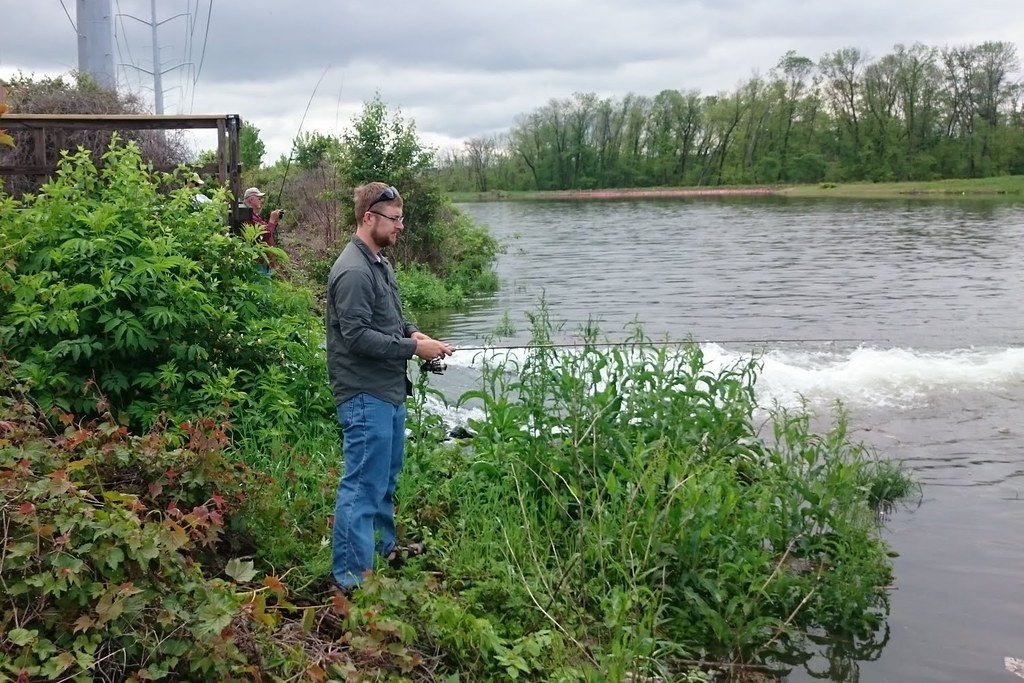
In the second week of May I traveled to D.C. to visit my friend Pat Kerwin.  It was the first time I took a flight for the sole purpose of a fishing trip!  We had been talking about a snakehead and shad trip for quite a while, and I was excited that the time had finally arrived.  My flight landed late Friday night - well after midnight - but I felt well rested the next morning and ready to fish.  We started off at a small discharge to see if I could get my lifer striped bass out of the way.

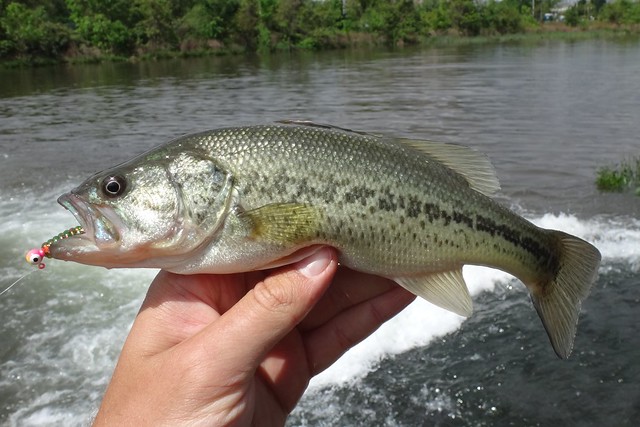
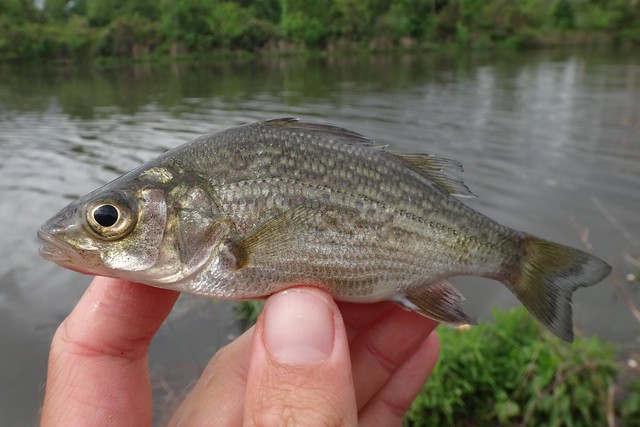
We  were surprised to find our friends Michael and George already at the discharge when we arrived!  Pat and I knew they would be in town, but we hadn't made any plans to meet them that morning.  It was good to finally meet George in person, because he would be joining our group to Peru later in the summer.  Fishing was slow, and I wasn't able to catch my striper.  I did catch a few bass and white perch.

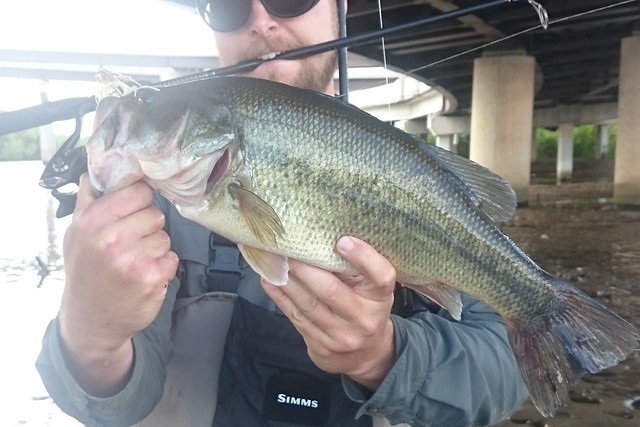
Largemouth Bass (Micropterus salmoides)


White Perch (Morone americana)


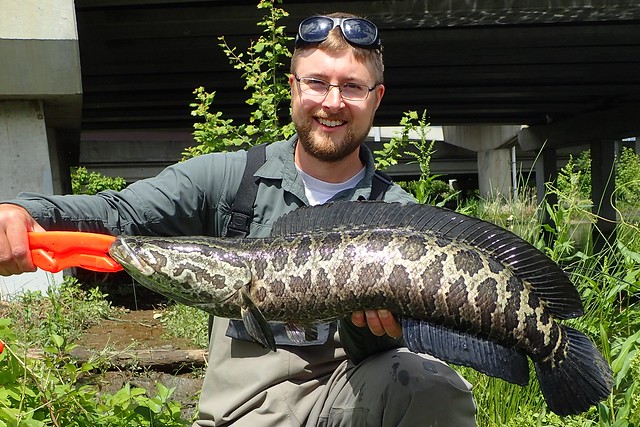
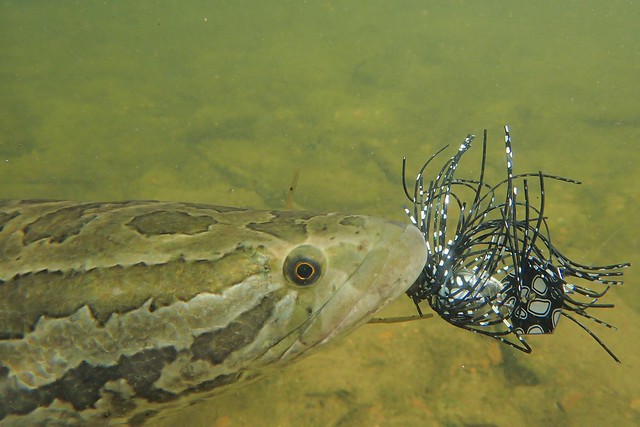
After lunch Pat and I headed to his top secret snakehead spot.  It was a huge privilege to be taken there.  On the way we tossed chatterbaits at a couple of spots where Pat has caught snakehead before, but we didn't get any hits.  The water was muddy, so all we could do was fish close to structure where we thought fish might be hanging out.  The water at Pat's good spot is clear, and when we arrived we could see nearly a dozen snakeheads hugging the bottom.  On my first cast I hooked up, but the fish came off.  Second cast hooked up again, and this time the fish was on!  Snakehead can swim backwards by undulating their long dorsal fin, which makes for a very unusual fight.  It's kind of like playing tug of war with a small bulldog.  It didn't take too long to bring it in though, and man was I stoked when I saw the size of it.  30 inches and beautiful fins and markings.  Thanks so much Pat!

Northern Snakehead (Channa argus) - new hook & line species #329
I made quite the ruckus bringing my fish in, but Pat was able to hook into one as well before the rest of the fish spooked and took off.  He played around with under water photographs while I was trying to recover my chatterbait, and some of the photos turned out really well.

It  really was a bummer that I spooked the rest of the fish.  We tried the current seam where the clear water met the muddy water, had a few follows, but did not get hit.  Our only option was to continue on and see if we could find more fish elsewhere.  I saw a few snakeheads as I was wading in shallow water, but they always saw me as well and refused to bite.  My last fish from this spot was a nice largemouth bass that hit right next to one of the bridge pilings.

Largemouth Bass (Micropterus salmoides)


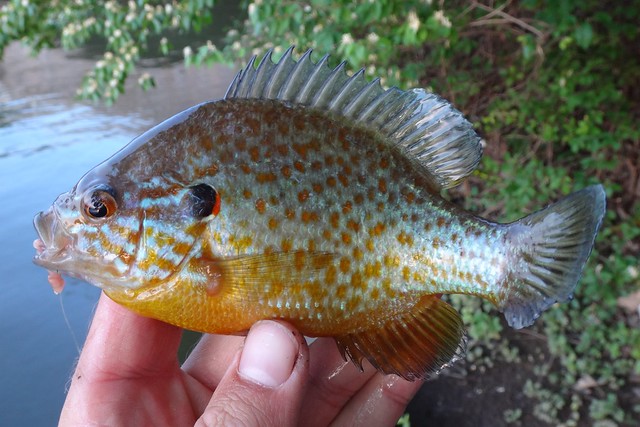
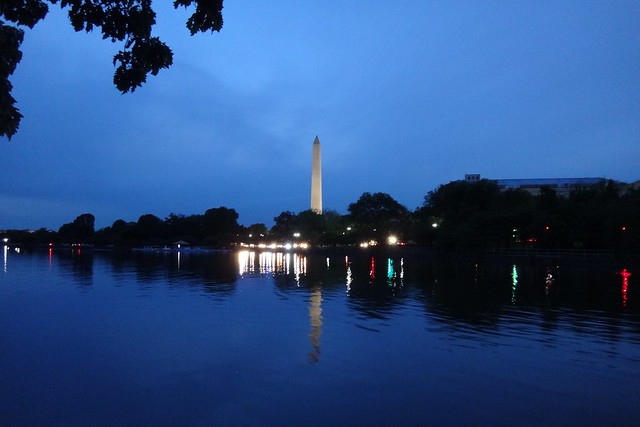
In  the evening Pat's wife Lia joined us, and we headed down to the Potomac River's tidal basin near the Washington monument.  We saw a few snakehead here as well, but they refused to bite.  After a while we put away our lures and switched to worms and cut bait.  We caught a variety of sunfish, white catfish, channel catfish, and striped bass.

Redbreast Sunfish (Lepomis auritus)


Pumpkinseed (Lepomis gibbosus)


White Catfish (Ictalurus catus) - new hook & line species #330


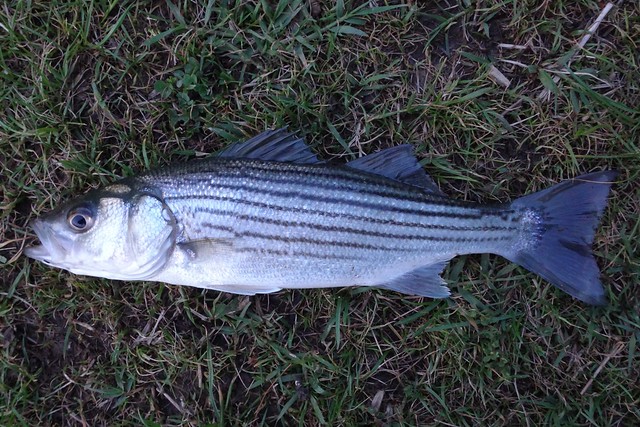
My  lifer striped bass hit a small pearl colored curly tail jig.

Striped Bass (Morone saxatilis) - new hook & line species #331


Lia wandered off in search of her lifer striped bass as well.  She came back successful, and of course hers was bigger than mine.


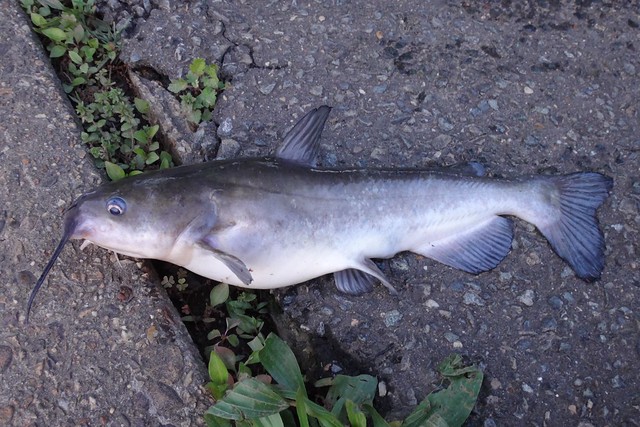
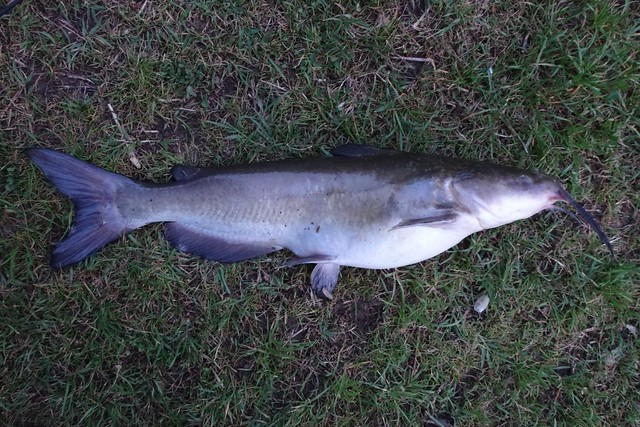
Several of the white and channel catfish were missing one or both of their eyes.  I have not seen this in the midwest.  I'm curious if they're being born this way in the Potomac or if something is attacking their eyes when they're young.  The catfish seemed to be in good health regardless of how many eyes they had.

Channel Catfish (Ictalurus punctatus)
It's hard to keep your fishing spot a secret when one of our most famous national monuments is in the background, haha.  Thank you Pat and Lia for a fantastic first day of my trip.

Thursday, March 21, 2019

South Africa part 8 - Gordon's Bay fishing the jetty

On Thursday, March 21st Josh and I took a domestic flight from Durban to Cape Town to start the bonus leg of our South African trip. We would eventually make our way down the coast to Struisbaai, so to make the drive shorter we rented an apartment in Gordon's Bay for the first night.


We needed a break from fishing (it's embarrassing, but it's true), so after we settled into the apartment we geared up to go trail running in the nearby Helderberg Nature Reserve. We knew the elevation gain would be tough, but we didn't realize how steep the main trail up the mountain would be, so we had to walk quite a bit. The view of False Bay and the surrounding area was well worth it though.


Eli had a bonus leg for his trip as well, a few days in Malawi targeting cichlids, but he also had enough time to join us in Gordons Bay for a day of fishing. We planned to fish the rock jetty of one of the nearby marinas, but first we wanted to checkout the stream near our apartment. That area has two endemic species, Cape galaxia and Cape kurper. We walked the bank for a while, and the water was pretty clear, but we didn't see any fish. We knew they would be tough to find, so we decided our time was better spent at the jetty picking up saltwater species.


Originally we had a fishing charter booked, but they called a few days before we arrived to let us know that it was cancelled due to the high winds in the forecast. They made the right call, because the wind was howling when we arrived at the jetty. And to think we also considered doing kayak rentals!


Fortunately the jetty made a perfect wind break, so the water inside the marina was calm. We chatted with the owners of the bait shop for a few minutes, and they recommended we head to the end of the jetty and fish the channel as the tide was going out. It looked promising.


I rigged up a piece of bait on medium gear and cast it out to the center of the channel. Perhaps something would pick it up as the tide was going out. While I waited I fished the rocks with lighter gear to catch the oddball stuff. The oddball stuff ended up being 90% super klipfish, and eventually a South African mullet and a Cape stumpnose. The klipfish were highly variable in appearance, so I took a photo of each one I caught, but they turned out to all be the same species. 

Super Klipfish (Clinus superciliosus) - new hook & line species #625


South African Mullet (Chelon richardsonii) - new hook & line species #626


White Stumpnose (Rhabdosargus globiceps) - new hook & line species #627


In classic Ben fashion, I added another injury to my list of fishing mishaps. The rocks closest to the water had a film of algae on them that made them incredibly slippery. I got overconfident, and you can see the result below. Coincidentally, those were the same pants that I was wearing when the catfish in Peru stabbed me with its pectoral spine. Sadly, they did not return home with me from Africa.


We expected the new species to come a little more easily, but we had to work pretty hard for them. The bait in the center of the channel wasn't getting any love, but eventually I was able to find one more small species in the rocks, the barehead goby.

Barehead Goby (Caffrogobius nudiceps) - new hook & line species #628


At low tide we decided to move over to the tidepools that had become exposed next to the base of the jetty. It was a habitat unlike anything we had ever seen. The rocks were pointed upward in jagged rows. I was glad to be wearing my sturdy hiking boots!


The tidepools were full of gobies, and they were easy to fish for. We added two more species from the same genus as the barehead goby. One of the commafin gobies I caught was especially colorful, and some of the banded gobies were jet black. The only other fish I saw were a few juvenile super klipfish, but there were other cool things to see like octopi, anemones, and urchins.

Commafin Goby (Caffrogobius saldanha) - new hook & line species #629


Banded Goby (Caffrogobius caffer) - new hook & line species #630


We were keeping an eye on the clock, and it was getting close to last call, so I gathered up some mussels from the tidepools and took them back out on the jetty. We hadn't really fished the ocean side, but I thought it was worth a shot despite the wind and surf. After a few bait resets, I felt a solid bite and pulled in the national fish of South Africa. Its name is really fun to say out loud. Give it a try, and say it with gusto! 

Galjoen (Dichistius capensis) - new hook & line species #631


We ate a seafood lunch at the restaurant next to the jetty. It was greasy but good. The tide was coming back in, and when we finished eating we noticed some kids fishing at the end of a concrete ramp. We didn't have much time, but it was worth taking a look.


The kids were catching a mix of small fish. Most of them were mullet, but there were a couple of salema mixed in as well. Josh and I needed the salema, so we jogged over to the car, got our micro gear, and jogged back. It was one of those situations that we felt should be easy, but it took us a while before we each caught one. Thanks to the kids for putting up with us!

Salema (Sarpa salpa) - new hook & line species #632


Eight new species in a day where our fishing charter got cancelled was beyond awesome. Sure the fish weren't big, but we did our best given the circumstances. The galjoen was the highlight for me. I wonder what else was lurking under the waves that we missed.


Photo courtesy of Elijah Wang.

After taking a group selfie, Josh and I said our goodbyes to Eli and hit the road for Stuisbaai (which should also be said with gusto).