Sunday, March 22, 2020

Social distance kayaking

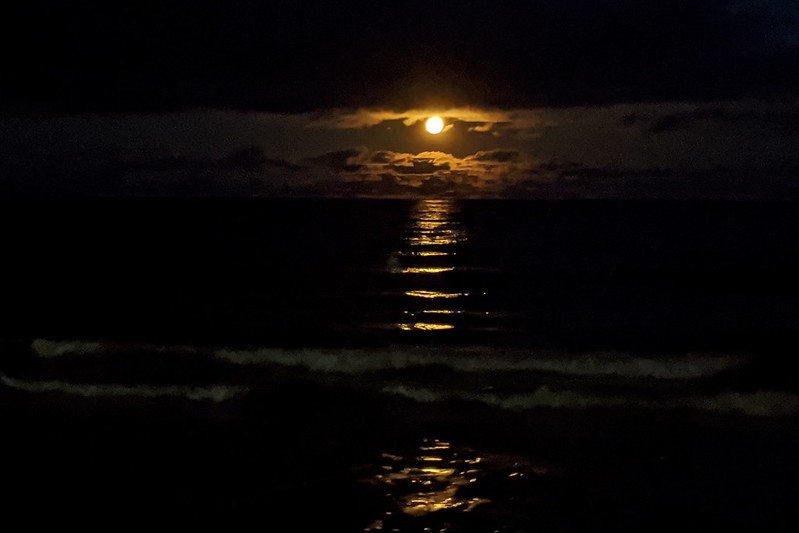
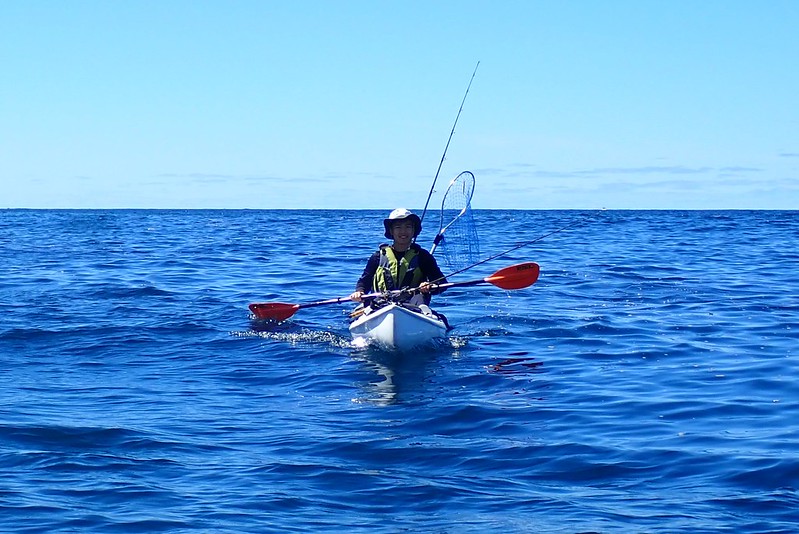
I think we can all agree that these are interesting times. The coronavirus pandemic has changed day to day life in California and around the world. Our governor recently issued a stay at home order, so I've been wrestling with whether or not I should go kayaking. The order says that outdoor exercise is allowed as long as social distancing is practiced. I felt that a solo paddle certainly fit that description, so yesterday I headed out for my longest paddle to date. I launched at 5:17am, a full hour and a half before sunrise. Paddling in complete darkness is pretty unnerving, but I had all of the lights and safety gear required for non-motorized vessels, and I was dressed for immersion (wetsuit top and bottom). Swells were 1.5 feet, and the wind was 5 mph. I stopped to take this first picture about an hour after I launched after I had paddled a little over 3 miles.


The sun was finally lighting up the sky when I reached my first fishing spot, a rock pile in a little less than 200 feet of water. I expected the usual mix of rockfish, and I planned to focus more on bringing home food than catching new species. I also wanted to try out a couple of heavier jigs that I recently purchased, hoping they would attract bigger fish.


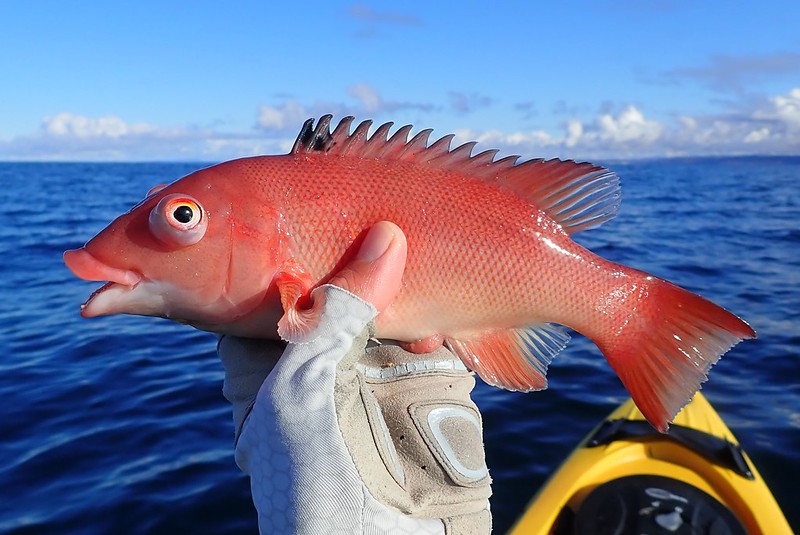
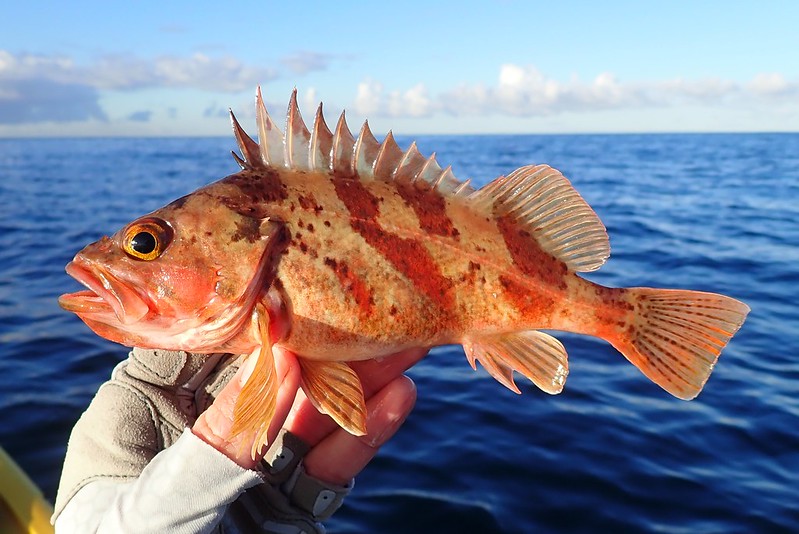
I switched back and forth between a rod rigged with dropper loops and one with a jig. My first fish on the dropper loop was a flag rockfish, definitely big enough to bring home. It looked like it would be a good day of bottom fishing!

Flag Rockfish (Sebastes rubrivinctus)


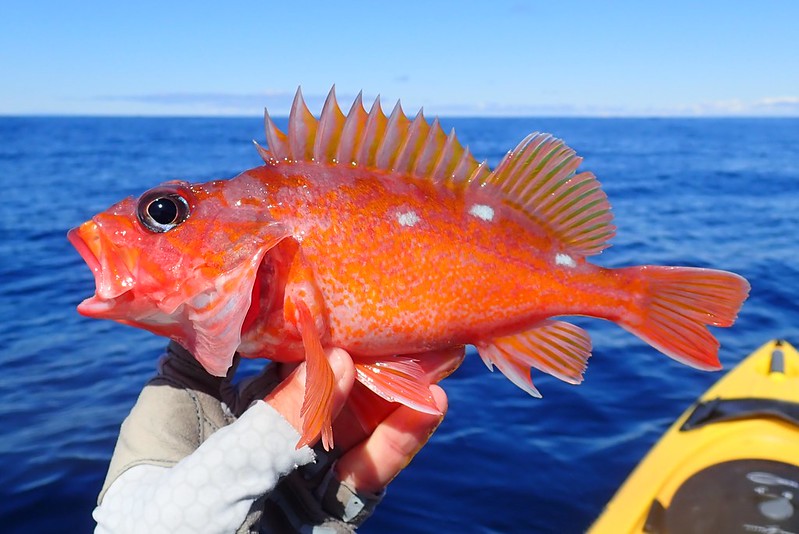
Next I sent down a pink speed jig with an assist hook at the top. It didn't take long for something to grab it, but I was amused when I saw how small the fish was. The starry rockfish that came up wasn't much longer than the jig! I'm pretty sure this is the first fish I've caught with an assist hook.

Starry Rockfish (Sebastes constellatus)


Next on the dropper loop was a former nemesis of mine, the elusive squarespot rockfish. This is a species that took me years to find even though all of my friends, including some who have only been to San Diego one time, have caught. I got one a few month ago though, so the curse has been lifted. Also on the dropper loop were numerous calico rockfish. They were the annoying little species of the day (there always has to be one).

Squarespot Rockfish (Sebastes hopkinsi)


Calico Rockfish (Sebastes dallii)

Once the sun was up it was hard to imagine that I had paddled all that way in complete darkness. On the way to my second spot I came across a kelp paddy in 260 feet. As I approached it I envisioned a huge school of halfmoons and blacksmiths underneath it, with yellowtail cruising around nearby. However, when I reached the patty there were no fish to be seen, either visually or on the fish finder. Ah well.


The second spot was another rocky area, this time in 275 feet of water. I caught another fish on the pink speed jig, an ambitious scorpionfish. Sadly on my next drop the jig got stuck in some structure, and I wasn't able to pull it free. On a side note, it's pretty difficult to break off 40 lb line from a kayak!

California Scorpionfish (Scorpaena guttata)


The bites were steady at this spot, and I added several more species to the day's count. Not pictured are ocean whitefish and Pacific sanddab. I figure my readers have seen enough of them in my recent kayaking posts and would appreciate the break.

Rosy Rockfish (Sebastes rosaceus)


California Lizardfish (Synodus lucioceps)


Greenspotted Rockfish (Sebastes chlorostictus)


My third spot was a seamount due west of Mission Bay, and it was the furthest I would be from shore, about 6 miles from the jetty and 7 miles from where I launched. As I approached the GPS pin someone in a small boat waved to me, and lo and behold there was Emerson and his dad. They decided to fish the same seamount and had already put several nice vermilion rockfish and a keeper lingcod in the boat.
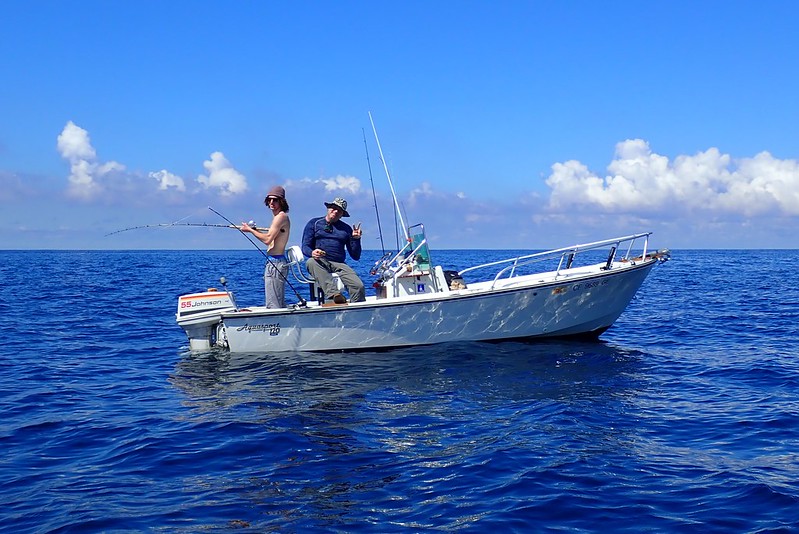


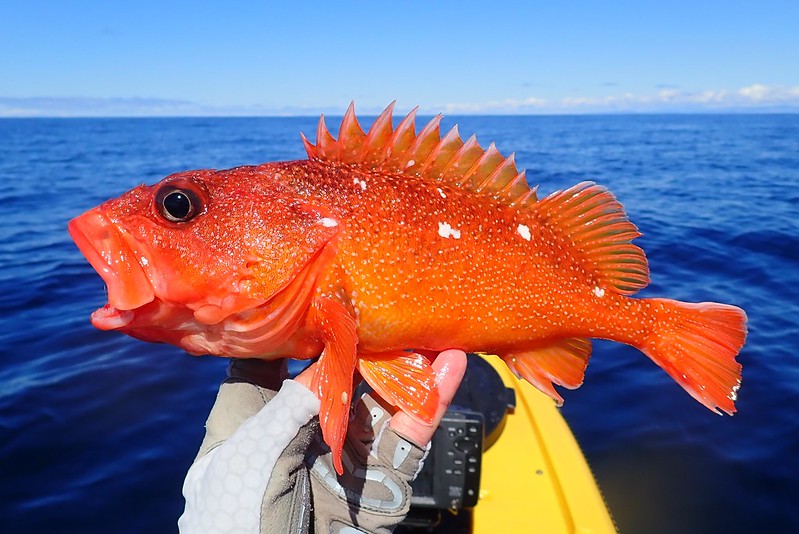
It took a bit of paddling around in circles before I could find good structure, but eventually I got a vermilion of my own. It wasn't big, but I added it to the cooler, which was beginning to fill up with similarly sized rockfish and whitefish.

Vermilion Rockfish (Sebastes miniatus)


I looked at my watch and saw that it was a little past noon, which meant there was no way to make it back by 1:00pm, which was my original plan. The wind could start picking up any time, so I said to myself "one more fish" and dropped two fresh strips of squid down to the bottom. My one more fish turned out to be a new species, a speckled rockfish!

Speckled Rockfish (Sebastes ovalis) - new hook & line species #660
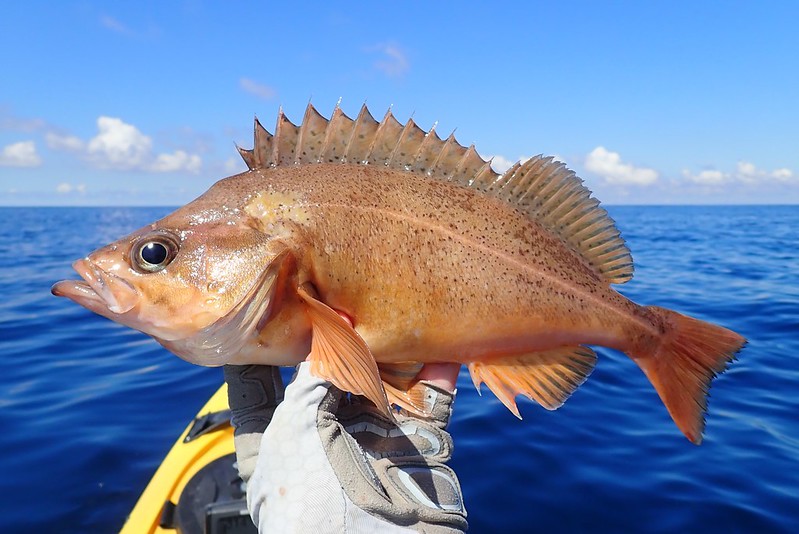

Emerson and his dad had drifted out of earshot, so I gave him a call to let him know about the catch and tell him that I was headed back to shore. I turned towards the east and took this picture, which at first glace looks like the open ocean. If you look closely though you can see the coast, which gives you an idea of how far I had to paddle back.


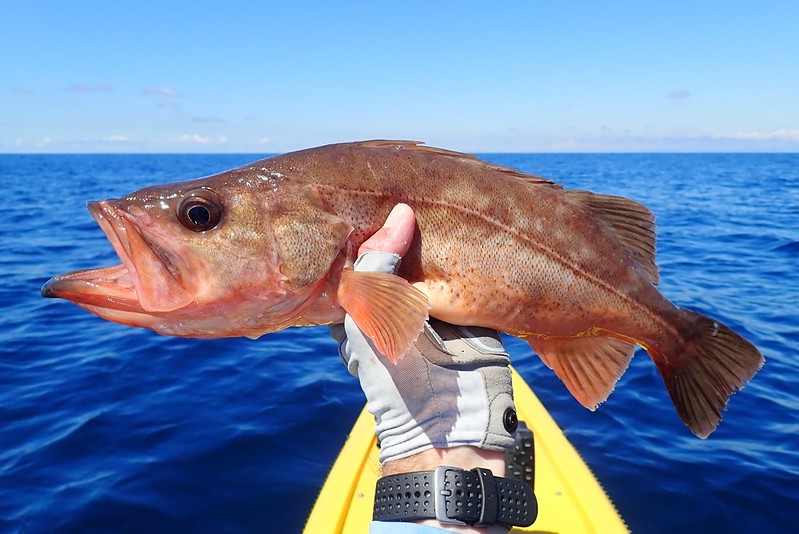
I decided to skip the last pin I had marked, but when I saw it on the fish finder screen I decided I needed a break. Also, I had a 6 oz chrome diamond jig in my tackle box that I needed to try out. I sent it to the bottom, jigged it up and down a few times, and almost immediately got bit. This fish was bigger than anything else I had caught, and it turned out to be a decent bocaccio, weighing in at 2.5 lbs.

Bocaccio (Sebastes paucispinis)

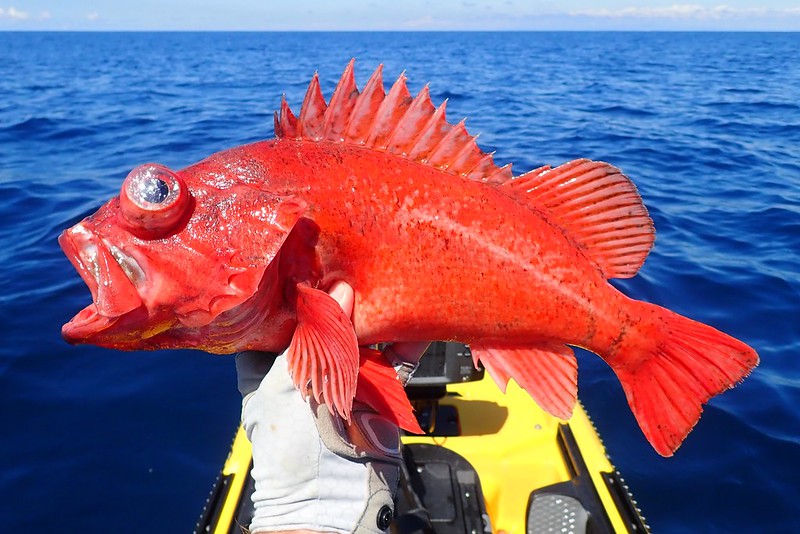
I sent the jig down again. This time I had to jig it up and down a bit longer, but another decent fish hit it, and I knew it would be my last fish of the day. It was a nice big vermilion, weighing 3 lbs. The cooler was completely full, so it was definitely time to pack it in.

Vermilion Rockfish (Sebastes miniatus)

The wind picked up more and more as I paddled back towards the jetty, which made the water pretty choppy. It wasn't enough to make me uncomfortable, but it slowed my progress. I stopped a few times to let the lactic acid drain from my arms and drink water, and eventually I was back at Mission Point Park, where I had launched 9 hours and 40 minutes earlier.


Miles: 19.90
Hours: 9:40
Water Temp: 61 F

I was surprised by how many people were hanging out in the park when I was loading my gear in the car to head home. It was disheartening actually, as it made it impossible for people to maintain the recommended 6 feet of distance from each other to avoid spreading the coronavirus. It's making me rethink whether I can in good conscious go to public places like Mission Bay or La Jolla Shores to launch my kayak. If things get worse, I'll probably hold off on any more outings.

Stay healthy everyone, and take care of each other! We'll get through this.

Monday, March 9, 2020

Bottom fishing La Jolla with Brandon

Rockfish are back in season in Southern California, and this past weekend my buddy Brandon was in town looking to catch some fish, so naturally we had to take the kayaks out and bottom fish La Jolla. My friend Kam once again lent me his faithful Scupper Pro, which Brandon and I greatly appreciated. We got an early start because we wanted to paddle out to a spot 5 miles from shore. The moon was about to set when we pulled up on the beach to unload gear.


The sea was pretty rough for the first hour or two, and our progress was a lot slower than I had hoped. It didn't help that I realized I wasn't wearing my PFD when we were about 200 yards from shore, so I had to go back to the car and get it. The water was pretty choppy, but I assured Brandon it would smooth out when the sun came out. It was a wet and bumpy ride, but eventually my prediction came true. To be honest though, I was starting to worry a bit.


I wasn't sure if we'd make it to the 5 mile spot, so we stopped to fish along the way while we waited for the conditions to improve. Our first stop was just outside the kelp beds in 60 feet of water. We caught a few ocean whitefish and small rockfish.

Ocean Whitefish (Caulolatilus princeps)


I found a rocky looking spot on my phone, and we paddled another mile west to it. Surprisingly, the bottom stayed at 60 feet the entire way. We stopped when I noticed structure on the fish finder, and we dropped our baits. Brandon caught a few more rockfish for his list, and the ones big enough to keep went into a cooler. I also caught one sheephead, but it was too small to keep.

Kelp Rockfish (Sebastes atrovirens)


California Sheephead (Semicossyphus pulcher)


Gopher Rockfish (Sebastes carnatus)


Around 10 am the water was finally nice and calm, but I expected the afternoon wind to pick up around 1 pm, so we didn't have time to finish the paddle out to the original spot. I looked on my phone again and found another rocky patch that would be in deeper water. Sure enough, the bottom steadily dropped off to 150 feet. We switched to heavier sinkers and gave it a try.


The decision to move paid off, because Brandon was able to add several more species to his count including flag rockfish (a big one!), honeycomb rockfish, and longfin sanddab. Surprisingly we didn't have much overlap, besides the ubiquitous ocean whitefish. I caught rosy rockfish, starry rockfish, and treefish. The treefish was the first one I've caught and photographed from the new kayak.

Rosy Rockfish (Sebastes rosaceus)


Starry Rockfish (Sebastes constellatus)


Treefish (Sebastes serriceps)


A little after noon we packed up our gear and paddled back towards La Jolla Shores. The wind was picking up right on cue, and I could tell that Brandon was starting to feel the long hours sitting in the kayak. Once we made it to the shelter of La Jolla Cove he looked much more upbeat. He had seven new species on his lifelist, which certainly helped!


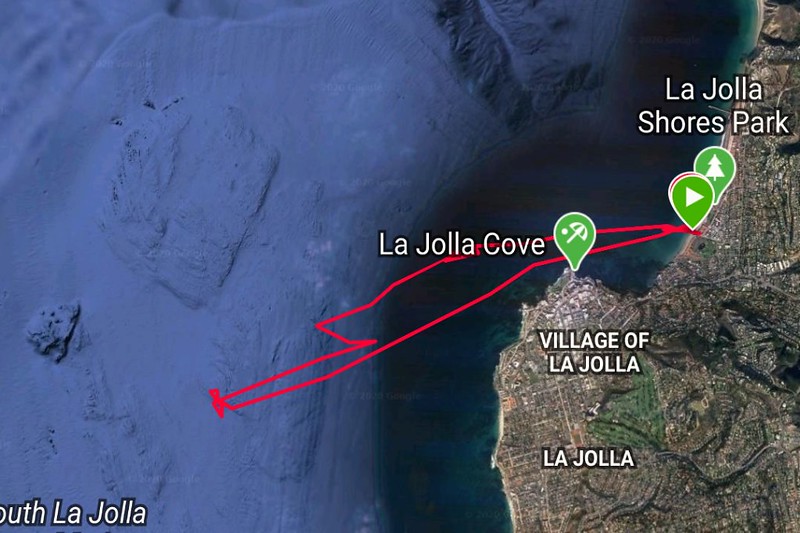
I zoomed out on the Garmin app to take a screenshot of the route so it would show our original target on the far left. Our first fishing spot is hidden behind the text of La Jolla Cove. Our second spot is to the southwest, and you can see how far we drifted back towards shore due to the wind. Our third spot is the furthest we went from shore, and you can see that the wind barely pushed us around.


Miles: 10.53
Hours: 6:34
Water Temp: 63 F

After we loaded our gear, we grabbed a quick bite to eat and then headed in the direction of the La Jolla tidepools. Sadly though we didn't make it. The Subaru's clutch failed, and we had no choice but to call a tow truck to take it back to my house. Kam also has a Subaru Crosstrek, and it's also out of commission at the moment, so unfortunately he's going to have wait a few days to get his kayak back.


Brandon is in town for the rest of the week, so I think he'll get to catch a few more species before he heads home. I'm really glad this trip worked out for him so he could see what ocean fishing from a kayak is like!

Next up for me is another long paddle day. Stay tuned...

Saturday, February 29, 2020

Scouting out the Mission Bay jetty

Several of my friends are coming to town in the next few weeks, so I thought I'd scout out the Mission Bay jetty to see what's biting. Today would have been a good day to kayak before the wind picks up tomorrow, but it felt good to enjoy a weekend without dealing with all that gear.


I worked my way over the rocks until I was 3/4 of the way to the end. I haven't really fished the ocean side of the jetty, so I started on that side using half a shrimp on a #6 hook. It got picked up right away by a small kelp bass. I caught another one later on the channel side.

Kelp Bass (Paralabrax clathratus)


After a few minutes of not getting bites I moved over to the channel side. There were a lot of small savage bites, and it took me a while to finally hook the culprit, a non-giant giant kelpfish. They're a pretty reliable species from the jetty, but I only catch one or two per session.

Giant Kelpfish (Heterostichus rostratus)


The species of the day turned out to be black perch. I caught 7 of them all together, and they were especially colorful. The juveniles were very dark all over, and the adults had a purple iridescent sheen, vertical bars, and blue and orange on their fins.

Black Perch (Embiotoca jacksoni)


One of them also had nice blue markings on its face and side. And of course you can't forget the orange lips and black mustache!


The small savage bites were continuous, but I didn't really want to downsize my #6 hook because I was hoping for a cabezon for my lifelist. Eventually though I'd hook up with the little biters, which were either juvenile black perch, opaleye, or rock wrasse.

Opaleye (Girella nigricans)


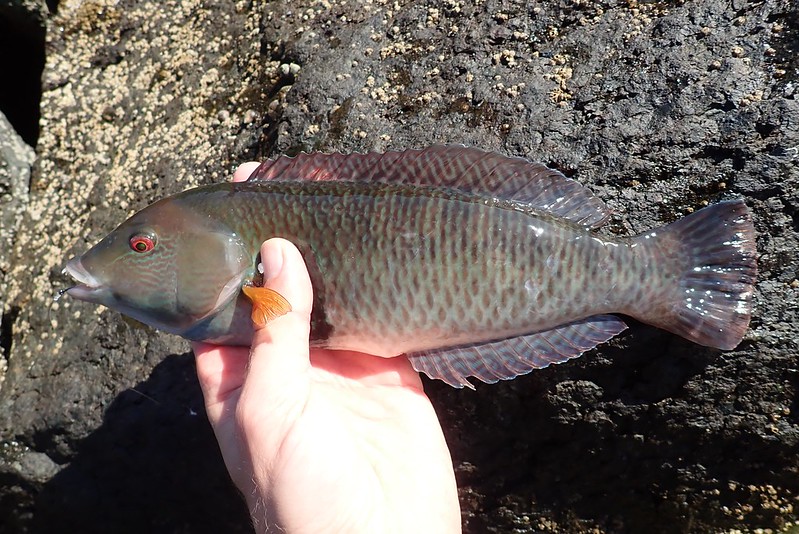
One of the rock wrasse males was the largest I've ever seen. I didn't realize they got that large! I also caught intermediate phase females and smaller males.

Rock Wrasse (Halichoeres semicinctus)


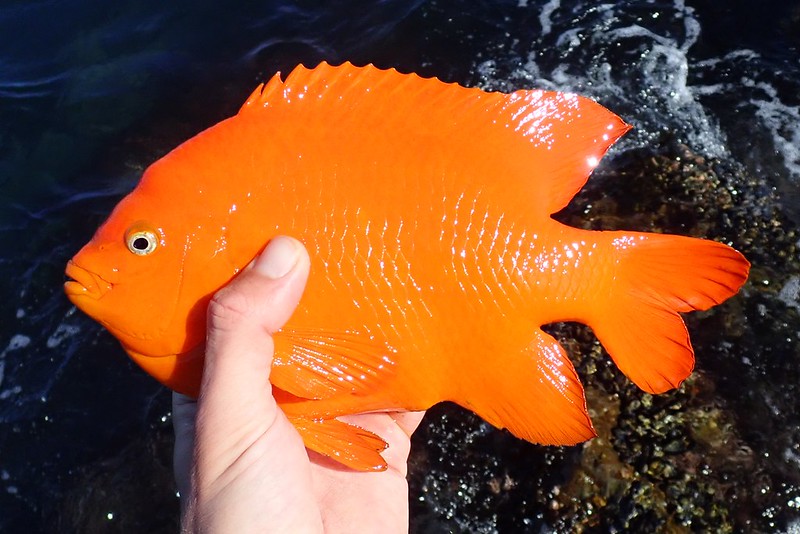
To wrap up the day I moved back to the ocean side and used up the last of my bait. Unfortunately, the only fish I hooked up with were garibaldi, which are a protected species and can not be fished for intentionally. I kept casting to new spots, but apparently these guys are in charge of that side of the jetty, because I couldn't find any other fish. *All of the garibaldi were caught incidentally and released unharmed.*

Garibaldi (Hypsypops rubicundus)


One of these days I'll catch a cabezon from one of these jetty sessions. However, even when I don't catch something new, I always enjoy the steady action and the lineup of interesting species.

Saturday, February 22, 2020

Two new species from the tidepools

After wrapping up a 15 mile kayak trip (see my previous post), I decided to check out the tide pools nearby because there was a low tide that was too good to pass up. My lower back was already sore, but damnit I was ready to be hunched over for another hour looking for tiny fish! This spot has a lot of shallow pools with rocks that could be carefully lifted up to see what might be living under them.


My main target was blind goby, a species that I've not yet found, but I suspected might be in the area. They cohabitate with ghost shrimp and honestly look a lot like them, minus the shrimp appendages of course. I slowly and carefully flipped rocks looking for them, but instead I kept finding clingfish. I've dangled baits in the faces of clingfish before, and I've come to the conclusion that they won't bite once you disturb the rock they're clinging to. However, one of the rocks I lifted had a clingfish sitting in the sand beneath it. Would he bite?? I quickly found a small shrimp to use as bait, dangled it on a Tanago hook in front of him without bothering to use a pole, and instantly he sucked it in!

California Clingfish (Gobiesox rhessodon) - new hook & line species #658


This is a fish I honestly wasn't sure I'd ever be able to catch on hook & line. I've heard of a few people catching northern clingfish in the Pacific Northwest states, but they grow quite a bit larger than California clingfish. I'll consider myself lucky.


I decided to spend 10 more minutes looking for blind gobies. They weren't under any of the rocks I looked under, but one of them had a pair of blennies instead. Making a note of where one of them hid, I found another tiny shrimp and dangled it in front of where I thought he might be facing. It really was my lucky day, because he came out and bit it, and it was the one blenny species in California I haven't caught.

Mussel Blenny (Hypsoblennius jenkinsi) - new hook & line species #659


Mussel blennies can be IDed by the cirri on their head, the small reddish spots on their face, and the large dark blue patch behind their eye. I'm not sure if those bright red tufts coming out of it's nostrils are an ID trait as well, but it's not something I'm used to seeing on rockpool blennies or bay blennies.


I still had an hour or more of good low tide and daylight, but I was really feeling the effects of getting up at 4am and paddling 15 miles, so I ended on a high note and headed home. Since this post is a little light on photos, I'll add in one of a colorful nudibranch that was cruising around the blenny tide pool. Next time I'll have to document some of the shrimp species as well.

I'll be back for the blind goby!

Whale of a day kayaking off Point Loma

My most recent kayaking trip turned out to be quite the adventure! The plan was to officially do a 15 mile paddle as a way to build endurance so I can expand where I'm able to fish around San Diego. The wind forecast showed low wind in the morning picking up to 8 or 9 mph around noon. I figured I could handle that, but I still wanted to be off the water by about 1 or 2pm. I also wanted a few hours to fish along the way, so I back calculated when I needed to start and ended up launching a few minutes before 6am.


By the time I exited the Mission Bay channel the sky was already becoming light. The sun came over the hills just after I paddled past Ocean Beach Pier.


I trolled a big Rapala as I went, but in hindsight it really wasn't a good idea, it slowed me down quite a bit. Looking at my Garmin data, I was averaging less than 3 mph for the first half of the day. My first bottom fishing spot was a small rise in about 90 feet of water. I didn't have any target species in mind, but it seemed like everything I caught was out of season, so I didn't stay long.

Kelp Rockfish (Sebastes atrovirens)


California Sheephead (Semicossyphus pulcher)


As I was putting away gear so I could resume paddling, I heard a "whoosh" to my right and looked over to see a whale, the first one I've seen in the wild! I was so excited, and it was even heading in my direction, so I'd probably get to see it up close.


When it resurfaced again, my happiness quickly changed to alarm. It was coming right at me! I gripped my paddle and camera at the same time and tried to get out of its way before it hit me.


It must have finally realized I was in front of it, because it dove just a few feet before it reached me. I looked down to see it pass directly under my kayak, and then I looked up to see its tail rise up taller than me. It disappeared beneath the water, and then bubbles started coming up all around me, so I paddled like crazy until I was well away from where I thought it might be.


The whale resurfaced 20 or 30 yards away and continued on its way. I ended up seeing two more later in the day, both headed in the same direction to the south. I'm sure the whale watching boats had a good day! My second fishing stop had swarms of big jacksmelt, so I didn't stay long there either.

Jacksmelt (Atherinopsis californiensis)


By the time I reached my third fishing spot, another small seamount, a layer of fog was rolling in from the south. You can see the change in color in my photos. Again I caught rockfish and sheephead, all of which were released.

Gopher Rockfish (Sebastes carnatus)


One thing I didn't consider when I planned my route was the kelp beds. It was a good thing I have a paddle kayak, because this would have been a problem if I had fins underneath me. Going over top of the kelp slowed me down a bit, but I kept on my course and was out of it before long.


My last fishing spot was a rise of about 25 feet surrounded by 40 feet of water. It looked like a fishy spot, but I knew I couldn't stay long because I needed to start my paddle back. I caught this vividly colored rock wrasse and a handful of small calico bass and then packed up my fishing gear.

Rock Wrasse (Halichoeres semicinctus)


Kelp Bass (Paralabrax clathratus)


The fog continued to roll in, so there wasn't much to see as I paddled along Point Loma. I chose a route a lot closer to shore compared to the way I came down in the morning.


By the time I reached Sunset Cliffs the fog had mostly cleared up. I was surprised by how much of the coast the surfers use. A couple times I had to correct my course away from shore so I didn't go into an area with a surf break big enough to get me into trouble.


The wind never became an issue, which I was very grateful for. I landed back at Mission Point Park 7.5 hours after I launched with my Garmin saying exactly 15 miles.


Miles: 15.09
Hours: 7:29

Overall the day was a success, and I learned a few things to help me plan my 20+ mile days in the future. I can probably launch an hour earlier, I should not mess around with trolling no matter how tempting it is, and for the sake of my lower back I should be really strict about a time limit of about 8 hours. There will always be a trade off between paddling time and fishing time, so I'm not going to do these crazy long sessions every time, probably once a month.

I'm looking forward to rockfish opening back up soon!